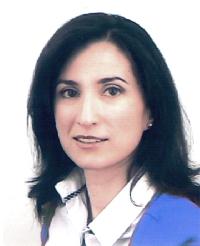
Audio Greeting Working languages: English to Spanish Spanish to English | Patricia Casanova Ochoa Madrid, Madrid, Spain Local time: 09:36 CEST (GMT+2)
Native in: Spanish | | |
Freelancer, Verified site user | | Translation, Interpreting, Website localization, Subtitling, Transcription | | Specializes in: | | Automotive / Cars & Trucks | Philosophy | | International Org/Dev/Coop | Environment & Ecology | | General / Conversation / Greetings / Letters | Education / Pedagogy | | Human Resources |
| Also works in: | | Games / Video Games / Gaming / Casino | Government / Politics | | Marketing / Market Research | Business/Commerce (general) |
More Less | | PRO-level points: 16, Questions answered: 8, Questions asked: 28 | Sample translations submitted: 2 | Spanish to English: Literary Translation | Source text - Spanish Texto 1:
ERROR 261 Clave rechazada
Algo interesante que contarme. Entonces abro el libro. Chuck me folla la cabeza. Me empapa las retinas en ácido. Reconstruir y visualizar los argumentos que plantea en las doscientas y pico páginas de cada libro ocupa toda mi memoria RAM (2), me deja las neuronas en estado comatoso y he de pincharles valium en el núcleo para recuperar al menos un mínimo de actividad tras la lectura. Troceo cerebral. Cuando pienso que un libro tiene que ser como una hostia en la cara, cruda y dura, me refiero a esto. Si un autor es capaz de llevarte a la catarsis, éste es el caso.
La reflexión consumista con sentido del humor de Douglas Coupland pero sin dosis de ciencia ficción – la crudeza violenta de Bret Easton Ellis (quien dijo de él: “Es posible que nuestra generación tenga ya su Don DeLillo”), sin elevar el nihilismo a sus máximas consecuencias – la prosa fría y sucia de Irvine Werlsh sin drogodependencia y toxicomanía – la cotidianeidad de Baricco con prosa poética reciclada – filosofía existencial a la manera de un Houellebecq sin reflexión excesiva – la bestialidad fría y exagerada de Aldo Nove.
El estilo de Palahniuk está en la prosa sencilla, esquemática y conversacional, absolutamente minimalista: la frase breve, perfecta y justa; el verbo pisoteando al adjetivo; la visualización palpable de lo contado; la narración plagada de máximas vitales; las oraciones que, descontextualizadas del resto del relato, emanan una radioactividad apisonadora; estructuras temporales alteradas para que el fin sea el principio y el principio sea el fin, en un caos argumental con una estructura cronológica perfectamente cuerda y cuadrada; el estribillo como oración lapidaria y obsesiva. Simplemente brillante.
Para qué derrochar verborreas cuando Menos Es Más es una máxima absolutamente viable y el Verbo Se Hizo Carne Y Habitó Entre Nosotros con forma y nombre de Chuck y cumplió perfectamente su cometido, esto
es: estrangularnos mirándonos de frente, a los ojos, sin sentimiento alguno, no te sugiero lástima, Chuck, y sé por qué.
Texto 2:
MUERDE LA MANO QUE TE DA DE COMER
¿Revolución? ¿Arte Revolucionario? ¿Quién quiere revolución cuando tenemos MTV, el mercado de Fuencarral, yogures con bífidus activos, suplementos de tendencias en los periódicos de tirada nacional o iPod’s? Con el Ché reducido a opción alternativa de merchandising y Mao luciendo honorablemente una gorra de Nike gracias a la publicidad, la revolución aparece como algo demasiado pesado para estos tiempos
que hay que tomarse a la ligera.
Abunda la escéptica apatía hacia cualquier cosa que saque al personal de su sacrosanto bienestar. Escasea la capacidad para imaginar mitos que unifiquen conciencias hacia otro destino social, por lo que cuando uno se acerca al arte de aires aparentemente revolucionarios no topa sino con una gran caparazón estético carente del menor contenido. La revolución como otro posible ingrediente más de nuestro entretenido
cóctel posmoderno.
En este panorama en el que los flujos de poder asimilan con aparente facilidad cualquier aspecto discordante bajo una capa de buen rollo y corrección política, el graffiti y sus ramificaciones son vitales. Sin ellas el arte actual se nos presentaría como algo semejante a un zoológico, cuando el verdadero arte revolucionario es el que debe sacar las fieras a la calle. El graffiti es la única expresión artística que casi por definición, en su búsqueda del soporte libre, es ilegal y conlleva un explícito componente de confrontación social.
Atenta contra premisas establecidas, contra las nociones acordadas de
espacio público.
Durante los últimos años este fenómeno decorativo-artístico-vandálico ha encontrado nuevos puntos de fuga, gracias a aproximaciones formales e innovaciones técnicas que van más allá del bote de spray y del estricto legado neoyorquino. Las restricciones estilísticas parecen haber sido fulminadas por una nueva generación de artistas – en su mayoría participes de la escuela anterior – armados con plantillas, carteles, pegatinas, rodillos, sprays, aerógrafos, pistolas de paintball y lo que haga falta para plantear las nuevas estrategias
expresivas del que definitivamente es el arte de la rebelión.
En Europa encontramos a algunos de los experimentadores más destacados e Influenza es sin duda un referente prioritario: un ejemplo de búsqueda de innovación e independencia, de afán por desarmar
convenciones.
| Translation - English Text 1:
Error 261 Password rejected
Here is something I find interesting. So I open the book. Chuck screws with my head. He soaks my retinas in acid. Reconstructing and visualizing the arguments he poses in the two hundred and something pages of each one of his books takes up all my RAM (2), it makes my neurons slip into a coma and makes me inject their nuclei with Valium so I may at least recover some brain activity after reading his work. This information chops up your brain. This is what I mean when I say that a book has to be like a slap in the face, harsh and dry. If there was ever an author capable of making you reach a catharsis, that would be him.
He has the consumerist thoughts with a touch of humor in the way of Douglas Coupland but without the dose of science fiction, the violent crudeness of Brent Easton Ellis (who said when referring to him: “Our generation may already have its own Don DeLillo,”) but without taking nihilism to its utmost consequences, the cold and dirty prose of Irving Welsh but without the drug dependency and addiction, the day to day feel of Baricco’s recycled poetic prose: existential philosophy without excessive reflections, reminiscent of Houellebecq, and the cold and exaggerated cruelty of Aldo Nove.
Palahniuk’s style resides on the simple, schematic, conversational and minimalistic prose: brief phrases fitting together perfectly, verbs stepping on adjectives, the tangible visualization of the story, the narration filled with crucial maxims, the sentences that, when taken out of context emanate an overwhelming radioactivity, the altered time structures that make the end appear like the beginning and the beginning like the end inside a chaos of arguments with a perfectly squared and coherent time line, and a refrain that becomes an obsessive epitaph. It’s simply brilliant.
Why bother with verbosity when the maxim “less is more” is perfectly viable? Why indeed bother when the Word Became Flesh and Dwelt Among Us in the shape of Chuck, who carried out his mission to perfection: to strangle you while he looks you in the eye, void of emotion. I inspire no pity in you Chuck, and I know why.
Text 2:
Bite the Hand that Feeds You
Revolution? Revolutionary Art? Who wants revolution when we have MTV, the market in Fuencarral, live active bifidus yogurt, fashion supplements in national newspapers, or iPods? Now that Ché has been reduced to alternative merchandising, and Mao proudly wears a Nike cap thanks to publicity, a revolution seems way too heavy for these days in which we are supposed to take it easy.
There’s a generalized and skeptical apathy towards anything that intends to bring private matters out of their sacred comfort zone. There is a lack of ability to imagine myths capable of unifying people’s awareness and point them towards different social destinies. This is why every time someone approaches what may seem to be revolutionary art, he/she may find nothing but a huge aesthetic shell devoid of any kind of content. Revolution then becomes one more ingredient of our amusing postmodern cocktail.
In this scene, where the currents of power can easily absorb anything dissonant into a layer of good vibe and political correctness, graffiti and its branches are vital. Without them, the art we have today would be like a zoo, while real revolutionary art must free the beasts onto the street. Graffiti is the only artistic expression that by definition, in its search for free support to bear it, is illegal and contains explicit elements of social confrontation. It goes against the established premises and the accepted ideas of public space.
During the last few years this decorative-artistic-vandalizing phenomenon has found new outlets, thanks to the new technical and artistic innovations that go beyond spray paint and the strict New York legacy. Restrictions in style seem to have been crushed by a new generation of artists – mostly from the old school – armed with stencils, posters, stickers, paint rollers, spray paint, airbrushes, paintball guns and whatever else they may need to create the new expressive strategies of what is definitely the art of rebellion.
Some of the most outstanding experimental graffiti artists are found in Europe and Influenza has become, without a doubt, a main references for this art: a model for the search of innovation and independence, a model in the quest to deconstruct conventions.
| | English to Spanish: Cholesterol | Source text - English Did you know that nearly 2,400 people die of heart disease and stroke every day in the United States? Together these two conditions are the leading causes of death for Americans and cause about a third of deaths each year.1
The good news is that by making some small and simple changes to your life you can greatly reduce your chances of developing these diseases.
One important way of reducing your risk for heart disease and stroke is by finding out about your cholesterol numbers and taking steps to keep them in check.2
What is cholesterol?
Cholesterol is a waxy substance that’s needed by every cell in your body. You might be surprised that very little cholesterol is actually found in foods. Most is made in the liver from the fat in the foods we eat.3
Cholesterol is carried throughout your body in your blood, attached to proteins. These combinations of cholesterol and proteins are called lipoproteins and there are two main types:
• “Bad” cholesterol (low-density lipoproteins or LDL). High LDL levels increase your risk of heart disease and stroke by causing your blood vessels to become narrowed by fatty deposits, making it harder for blood to flow to areas where it’s needed.
• “Good” cholesterol (high-density lipoproteins or HDL). Higher HDL levels decrease your risk of heart disease and stroke by helping to remove cholesterol from your circulation.
Know your levels
You can find out your cholesterol levels by having a simple blood test. You will normally be given a value for your levels of total cholesterol, LDL and HDL, measured in units called milligrams per decilitre (mg/dL). Your should aim for:3
• a total cholesterol level below 200 mg/dL
• a LDL level below 100 mg/dL
• a HDL level over 60 mg/dL
More than a third of Americans (106.7 million people) have over the recommended level of total cholesterol.4
If you have other risk factors for heart disease and stroke, such as high blood pressure, diabetes or smoking, it is even more important for you to keep your levels of bad cholesterol as low as possible.
| Translation - Spanish ¿Sabía usted que cada día mueren cerca de 2,400 personas de enfermedades del corazón y accidentes cerebrovasculares en los Estados Unidos? Estas dos enfermedades juntas son la causa principal de muerte entre los estadounidenses y provocan aproximadamente un tercio de las muertes que ocurren cada año1.
La buena noticia es que si lleva a cabo algunos pequeños y sencillos cambios en su estilo de vida, usted podrá reducir significativamente el riesgo de padecer estas enfermedades.
Una manera importante de reducir el riesgo de desarrollar enfermedades cardiovasculares y accidentes cerebrovasculares, es averiguar cuáles son sus niveles de colesterol y tomar medidas para mantenerlos bajo control2 .
¿Qué es el colesterol?
El colesterol es una substancia cerosa necesaria para todas las células de su cuerpo. Quizás le sorprendería saber que en realidad los alimentos contienen muy poco colesterol, ya que la mayor parte de esta sustancia se produce en el hígado a partir de la grasa contenida en los alimentos que comemos3.
El colesterol se une a ciertas proteínas para ser distribuido por todo el organismo a través de la sangre. Estas combinaciones de colesterol y proteínas se conocen como lipoproteínas y hay dos tipos principales:
• El colesterol “malo” (lipoproteínas de baja densidad o LDL por sus siglas en inglés). Los niveles altos de LDL aumentan el riesgo de desarrollar enfermedades cardiovasculares y accidentes cerebrovasculares, ya que la grasa se deposita en los vasos sanguíneos haciéndolos más estrechos. Como consecuencia de este estrechamiento es más difícil que la sangre fluya hacia los lugares donde se necesita.
• El colesterol “bueno” (lipoproteínas de alta densidad o HDL por sus siglas en inglés). Los niveles altos de HDL disminuyen el riesgo de desarrollar enfermedades cardiovasculares y accidentes cerebrovasculares al ayudar a eliminar el colesterol de la sangre en circulación.
Conozca sus niveles de colesterol
Usted puede conocer sus niveles de colesterol simplemente con hacerse un análisis de sangre. En los resultados le darán el valor de colesterol total, más sus niveles de LDL y HDL, medidos en una unidad llamada miligramos por decilitro (mg/dL). Los niveles idóneos son los siguientes3:
• Un nivel de colesterol total por debajo de los 200 mg/dL.
• Un nivel de LDL por debajo de los 100 mg/dL.
• Un nivel de HDL por encima de los 60 mg/dL.
Más de un tercio de los estadounidenses (106.7 millones de personas) tienen una cifra de colesterol total que está por encima del nivel recomendado.4
Si usted tiene otros factores de riesgo para enfermedades cardiovasculares y accidentes cerebrovasculares, tales como presión arterial alta, diabetes o ser fumador, es aún más importante que mantenga sus niveles de colesterol malo lo más bajos posible.
| More Less | | Logística, Medio Ambiente, ONG, Real Estate, Recursos Humanos | | Years of translation experience: 2. Registered at ProZ.com: Jan 2007. | | N/A | English to Spanish (ESTUDIO SAMPERE, SPAIN) English to Spanish (Estudio Internacional Sampere) Spanish to English (Estudio Internacional Sampere) | | N/A | | Adobe Acrobat, Microsoft Excel, Microsoft Word, Microsoft Excel, Powerpoint 2007 - Level 1 Certification | | http://www.lacabinamexicana.wordpress.com | Trados Inicial [download] Curso de corrección ortotipográfica y comunicación escrita [download] | | About me La interpretación y la traducción se han convertido en una nueva pasión para mí. Después de vivir 7 años en EEUU y de haber realizado estudios de danza, historia y pedagogía, llegué a España con la posibilidad de formarme en esta nueva profesión. Tras haber completado mis estudios en la Escuela de Intérpretes y Traductores del Estudio Internacional Sampere, he comenzado a trabajar continuamente. Mis áreas de especialización aparecen en mi CV, así que voy a a provechar este espacio para decir que este trabajo ha resultado ser un magnífico reto personal y profesional que me ha aportado muchas experiencias de trabajo gratas y enriquecedoras.
| This user has earned KudoZ points by helping other translators with PRO-level terms. Click point total(s) to see term translations provided.
Total pts earned: 20 PRO-level pts: 16
| | Language (PRO) | | English to Spanish | 16 | | Top general fields (PRO) | | Other | 4 | | Art/Literary | 4 | | Medical | 4 | | Bus/Financial | 4 | | Top specific fields (PRO) | | General / Conversation / Greetings / Letters | 4 | | Art, Arts & Crafts, Painting | 4 | | Medical: Dentistry | 4 | | Education / Pedagogy | 4 | See all points earned > |
|
| Keywords: Recursos Humanos, Turismo, Human Resources, Art, Dance, Pedagogy, conference interpreter, traslator, localization Mexican Spanish, USA English
Profile last updated Jan 21 |