| Pages in topic: < [1 2 3 4 5 6 7 8 9 10 11 12 13 14 15 16 17 18 19 20 21 22 23 24 25 26 27 28 29 30 31 32 33 34 35 36 37 38 39 40 41 42 43 44 45 46 47 48 49 50 51 52 53 54 55 56 57 58 59 60 61 62 63 64 65 66 67 68 69 70 71 72 73 74 75 76 77 78 79 80 81 82 83 84 85 86 87 88 89 90 91 92 93 94 95 96 97 98 99 100 101 102 103 104 105 106 107 108 109 110 111 112 113 114 115 116 117 118 119 120 121 122 123 124 125 126 127 128 129 130 131 132 133 134 135 136 137 138 139 140 141 142 143 144 145 146 147 148 149 150 151 152 153 154 155 156 157 158 159 160 161 162 163 164 165 166 167 168 169 170 171 172 173 174 175 176 177 178 179 180 181 182 183 184 185 186 187 188 189 190 191 192 193 194 195 196 197 198 199 200 201 202 203 204 205 206 207 208 209 210 211 212 213 214 215 216 217 218 219 220 221 222 223 224 225] > | “龙”的英文应该翻译成 Loong - 转发 (A Chinese Teacher Suggests that "Dragon" should be written as "Loong") Thread poster: Libin PhD
|
|---|
ysun 
United States
Local time: 18:22
English to Chinese
+ ...
| it's more than a translation blunder to translate 北海龙王 as "Loong King of the Northern Sea"! | Apr 18, 2025 |
hj58 wrote:
告诉大家一个好消息:哪吒海外版译龙为 loong 了
太气人了!
 
“Born of darkness, deception is second nature to me.” - Ao Shun, Loong King of Northern Sea
https://www.youtube.com/watch?v=9U5iFIJcdTI
It is now clear that Nezha is an Indian god, not "Captain China". Then, what is the nationality of Ao Shun (敖顺), the Dragon King of the Northern Sea? Where did he live? Do you have any ideas? Does anybody want to be called "the offspring of the Loong King”?
Dragon King
https://en.wikipedia.org/wiki/Dragon_King
Dragon of the Northern Sea
His proper names are Ao Shun (敖順) or Ao Ming (敖明), and his body of water is Lake Baikal.
What is the Lake Baikal? It's Chinese name is 贝加尔湖 that most of the Chinese are familiar with. Some Chinese people would say that Lake Baikal belonged to China in ancient times. That's correct. However, it was not until A.D. 630 (公元630年) during the Tang Dynasty (唐朝) that the Lake Baikal was included in the map of China. The Dragon King of the Northern Sea lived in the Lake Baikal much earlier, sometime between 17th to 11th century B.C. (公元前). Therefore, the Dragon King of the Northern Sea is NOT a Chinese dragon. How can it be translated as "Loong King" since "loong" refers to the Chinese dragon only as you defined? How can a foreign dragon become the symbol of the Chinese nation and Chinese culture? Meanwhile, the appearance and nature of the Dragon King of the Northern Sea don't fit your definition of “Loong”. On the contrary, it seems that the self-declared deceptive nature of the Dragon King of the Northern Sea fits the description of a “polar bear king” or a “Siberian wolf king”. If you call such dragon kings "loong kings" (i.e. Chinese dragon kings), “西方人当然要把中国人看成是恶魔和坏人了” (that's your own words, meaning "westerners would certainly regard Chinese people as demons and bad people"). In other words, such a translation is self-demonization, or shooting oneself in the foot.
Therefore, it is more than a translation blunder to translate 北海龙王 (the Dragon King of the Northern Sea) as "the Loong King of the Northern Sea"! 真要气死人了!
Lake Baikal 贝加尔湖
https://en.wikipedia.org/wiki/Lake_Baikal
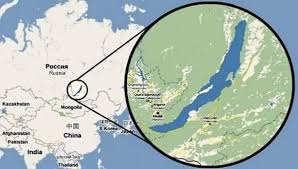
the location of Lake Baikal
.png/960px-唐朝疆域(繁).png)
Map of China in the Tang Dynasty A.D. 618 - 907
也谈“龙”的英文应该翻译成 Loong
黄佶(华东师范大学传播学院) 2006年3月22日
http://www.loongfeng.org/ye-tan-long-de-ying-wen-ying-gai-fan-yi-cheng-loong/
The loong is a spiritual tie linking the Chinese people. The loong, as the symbol of the Chinese nation, has become part of the Chinese culture. Chinese people are proud to call themselves “the offspring of the Loong”.
The loong is translated as “dragon” wrongly now. In fact, loong is so different in nature from Western Dragons that it may be more reasonable to consider them as dissimilar creatures, rather than as the same creature interpreted differently.
(2) used to be the symbol of Chinese kings, they were called “the son of the Loong”.
[修改时间: 2025-04-19 00:39 GMT]
| | | | ysun
United States
Local time: 18:22
English to Chinese
+ ...
hj58 wrote:
ysun wrote:
但我认为,即使真的“被无数同胞认可”,也还远远不够。关键在于,“改译龙为 loong”的主张得让英语世界的广大民众普遍接受才能算数,否则你那十八年的努力就是在做无用功!
当然是国内民众先使用,然后再外国人知道、使用。现在已经有大量年轻人在积极向外国人宣传 loong 了。
几个人影响了几亿人,这明明是有用功。
你们反对了十几年,最后螳臂当车,才是做了无用功。
究竟是谁在螳臂挡车、做了无用功?阁下别出心裁创造的 loong,连你校的学生都不采纳,连许多中国人都不同意,这还不是做无用功?英国人使用 dragon 这一单词用了800多年,你却想一下子改成 loong,岂非异想天开?
知乎:中国的「龙」翻译为「dragon」准确吗?
https://www.zhihu.com/question/21190200
34 个回答
Ying Long
937 人赞同了该回答
Ying Long wrote:
首先这里有几个误区:1、中国龙没翅膀,西方龙有翅膀不一定。“有翼者曰应龙”——《广雅·释螭》无翼的西方龙,太多了2、西方龙邪恶不一定。参见威尔士亲王国的国旗。3、中国龙身体很长现今常见的龙形象多是明、清时期留下的,但纵观龙纹演化史会发现龙不一定都是长长的。比如唐宋时期有兽形龙,身体不长。Dragon是此类神话生物的统称,通常都可以这样翻。基本上除了南极洲和北冰洋,世界各地都有巨大的蛇、蜥类神话生物的传说,统称为 Dragon-like creature。只有会产生歧义的情况下才需要区别对待。比如一篇介绍各个文化中龙类传说的文章,你要突出各地龙类生物的不同点,印度的就得叫Naga,美洲的就得叫Quetzalcoatl,欧洲的得细分出Dragon、Wyvern、Lindworm、Basilisk等,中国的要分Ying Long、Qiu Long、Chi Long、Jiao Long等。再比如根据上下文语境无法判断文化归属的情况下,你可能需要用 Chinese Dragon、 Oriental Dragon来翻译不推荐采用冷僻的译法,那是给自己找麻烦,也是给读者找麻烦。
=============
补充:其他两个答案都在推荐 loong 这个译法,我个人非常反对这个翻译。对比一下这几个词:loon(笨蛋), loo(厕所), loony(疯子)。是不是觉得它不能直视了?这个词从创造到传播的全过程我都看在眼里,创造它的人既不是国学大师,也不是资深翻译,对龙一知半解。我曾经和他对过话,他最初连「应龙」是什么都不知道。 所以这个词是一个对龙一知半解的人在研究不足的情况下想出来的主意,它的传播借了民族情绪的东风。可是实际上,「loong」所能表达的含义与创造它的初衷是相反的。因此,音译请用「Long」而不是「Loong」。
=============
继续补充: @砂糖牛扒 表示:另一方面,翻译的目的是为了让人理解信息。而如今使用loong的肯定比long的多的多,就连人名都是翻成loong的(XiaoLoong Lee)。当大多数人都习惯了某个词汇时,请给出不嫌麻烦地非要改变众人习惯的理由。
正相反,外国人对龙的音译一直是Long,意译一直是Chinese Dragon。 反而 Loong 是个不存在的词,是近几年才被中国人传播的,「不嫌麻烦地非要改变众人习惯」。这情景就好比外国人给中国人造了个汉字,然后告诉中国人这个「汉字」该怎么读,是什么含义。举个例子,可以看一下英文维基的Dragon词条,关于Asian Dragon的部分:「In East Asia, the concept of dragon appears largely in a form of a Long, a beneficent dragon-like creature from Chinese folklore. 」还有旁边的配图「Longshan Temple」龙山寺。看到一个词新,一般人都会先联想到一个已知的词。比如中国人看见 Shabi 一定是想到那个骂人的词,而不会觉得这其实是个外国人名。所以说「loong」表达的含义与创造它的初衷相反。
这位 Ying Long 说得很对,“这情景就好比外国人给中国人造了个汉字,然后告诉中国人这个「汉字」该怎么读,是什么含义”。
一个中国人造了个英文单词"loong",然后再向英语世界的 English speakers 推销,强求他们接受,那岂不是喧宾夺主、搞颠倒了?确实,loong 这个词的"传播借了民族情绪的东风"。难怪连“胡叼盘”也会来上串下跳地凑热闹!
小重山
26 人赞同了该回答
小重山 wrote:
复制一段不知道作者的论述(因篇幅很长,就不再引用,请自己往下看),我认为说的已经很明白了(还顺便反驳了那些说什么Dragon是“邪恶”的,所以不能用作“龙”的翻译)。简单点说就是,要么意译翻成 chinese dragon,要么汉语拼音音译翻成 long(过去的“威妥玛”拼法则是译成 lung)。什么 loong 更形象的说法完全是无稽之谈,语言要么约定俗成,要么按国家标准。那些上升到文化高度,还不忘黑一下西方龙的人,省省吧。
......
即使承认“Lee Siu Loong”这一拼法的合法性,也不能说明“龙”字在广东地区甚至香港地区就一无例外地被转写成Loong,一百多年来,香港地名“九龙”在英语中常常被写成Kowloon,有的时候亦作Kawlun、Kaolong、Kaolung、Kawlung等等,这说明“龙”字的粤话读音的英语音译远非 Loong 这一种,拼写根本谈不上统一。
类似地,有人声称,国外已经普遍接受 jiaozi (饺子)、zongzi (粽子)之类的英文单词,那是坐井观天、孤陋寡闻,还真的以为英语就是汉语下的蛋、只要会汉语就会英语了!
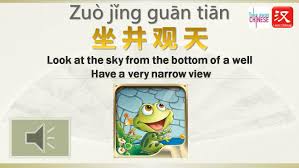
Idiom story:《坐井观天》Look at the sky from the bottom of a well
https://www.bilibili.com/video/BV1LK411k7eS/
| | | | ysun
United States
Local time: 18:22
English to Chinese
+ ...
| Let's listen to Mr. Shi Aidong, a real expert on dragon culture | Apr 25, 2025 |
Dragon or loong: much ado about nothing (无事生非)
The name boondoggle with Chinese cultural representation
YIXUAN MOLLY WANG AND YUXUAN JIA
AUG 01, 2024
https://www.eastisread.com/p/dragon-or-loong-much-ado-about-nothing
The Chinese dragon (龙/龍), originally a symbol of imperial power and later the embodiment of the Chinese nation-state, is also a point of contention for some. Opponents of the translation "dragon" argue that because the Chinese traditional beast shares a name with the felonious monster in Western culture, it carries built-in associations with evil. They believe that as China engages more with the world, this association will damage China's global interactions and image. This debate, dating back to 2006, has resurfaced with the advent of 2024, the Year of the Dragon.
However, as the author of the following article said, "When viewed as alien, no matter how pleasant your name is, you will be depicted negatively. When seen as a friend, even a name like 'mouse' can be endearing, as in Mickey Mouse."
Shi Aidong is a researcher at the Institute of Literature at the Chinese Academy of Social Sciences and Vice President of the China Folklore Society. His book, "中国龙的发明:16-20世纪的龙政治与中国形象 The Making of the Chinese Dragon: Dragon Politics and China's Image from the 16th to the 20th Century," was originally published in 2014. In the 2024 edition, the subtitle was changed to "近现代中国形象的域外变迁 The Transformation of Modern China's Image Abroad."
================
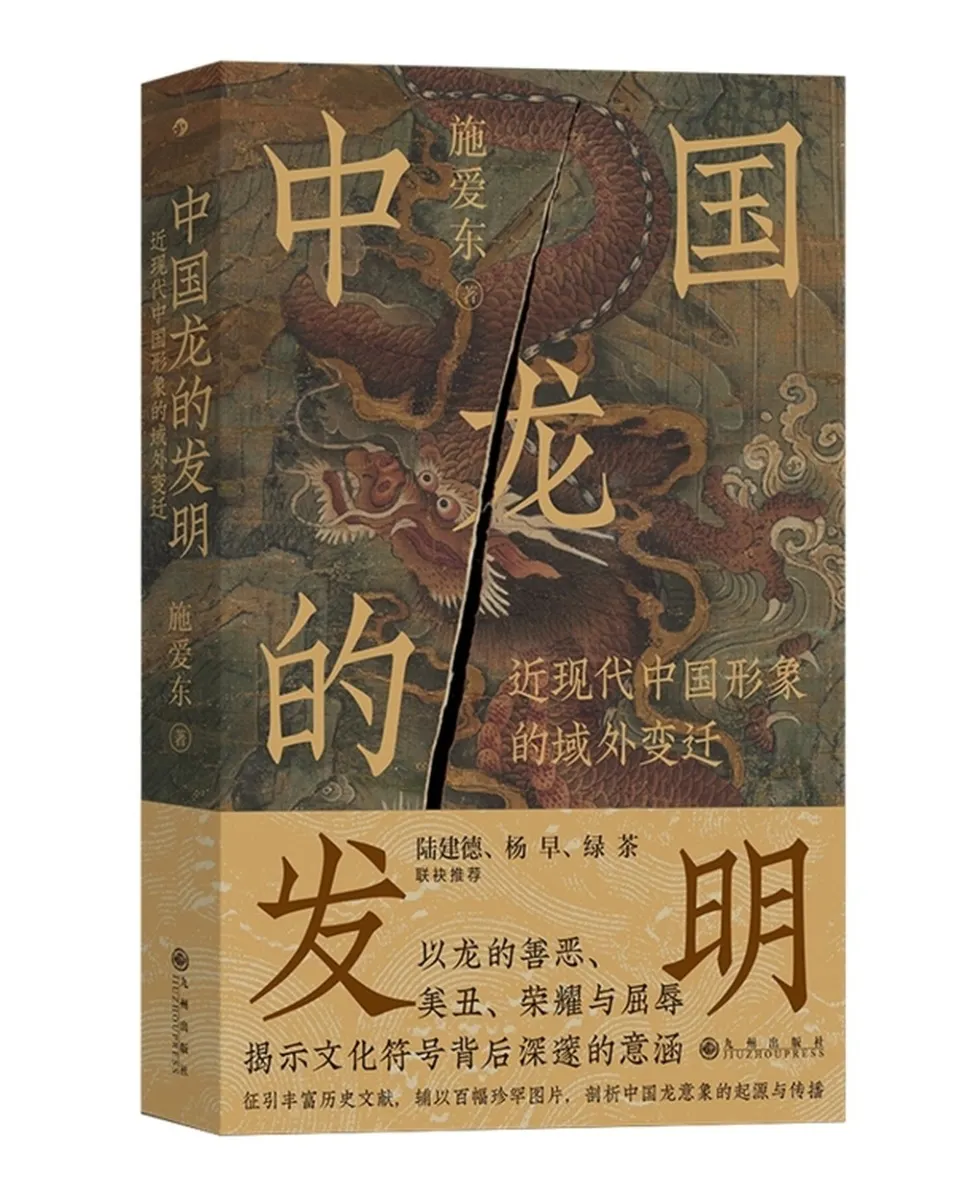
《中国龙的发明》修订版后记
The Making of the Chinese Dragon: Afterword for the 2024 Edition
As the Year of the Dragon approaches in 2024, I've been kept extremely busy. The whole nation is immersed in a "dragon atmosphere," with various cultural institutions contemplating how to craft the perfect "dragon narrative." Many people consider me an expert on dragon culture, and their all-out efforts for my articles and interviews left me in a state of unbearable distress. I am reluctant to monotonously repeat the same viewpoints and materials on dragon culture.
Over the years, despite my ongoing attention to new developments in dragon culture in hopes of discovering new topics, there haven't been any significant advancements honestly. The culture of the Chinese dragon has persisted for thousands of years, and any changes over the past decade are trivial in the grand historical context.
However, a "translation" topic from as far back as 2006 has continuously approached the center stage and has been thrust into the media spotlight again with the upcoming Year of the Dragon. This issue warrants a few remarks in this afterword.
In December 2006, Professor Wu Youfu, the Secretary of the Party Committee at Shanghai International Studies University, launched a major project "Shaping China's National Image," funded by the Shanghai Planning Office of Philosophy and Social Science. When Wu briefed the press about the projects, he pointed to an important motive: "The English word for 'dragon' is perceived in the Western world as a domineering and aggressive behemoth. The image of 'dragon' often leads to some biased and arbitrary associations for foreigners who are not well-versed in Chinese history and culture."
Concurrently, Associate Professor Huang Ji of the School of Communication at East China Normal University persistently advocated for the "proper re-recognition of the dragon" by posting on major online platforms, suggesting the adoption of the English translation "loong" and cancellation of the wrong translation "dragon" as he believed this to be the fundamental way to prevent misconceptions of Chinese legendary beast.
Their proposal sparked wide and intense discussions on the Chinese internet, with strong voices on both the against side and the for side. The debate continued, and in October 2007, a group of "dragonologists" gathered in Lanzhou for a dragon culture seminar, which subsequently released the "Declaration of the First Chinese Dragon Culture Forum in Lanzhou", proposing the initiative to "correct the 'foreign name' of the Chinese dragon." "The Chinese dragon and the Western dragon are worlds apart. The Chinese dragon, with its wondrous form, symbolizes justice and good fortune, while the Western dragon, with its grotesque appearance, embodies evil and disaster. The Chinese dragon should be translated as 'loong' in English to showcase this distinction," reads the Declaration.
As these dragonologists explained, "loong" is derived from the English word "long," which resembles the pronunciation of "龙" (Lóng) in Chinese. The meaning of 'long' also aligns with the dragon's physical attributes, and the double 'o' evokes the image of the dragon's large, mystical eyes, capturing its essence in both shape and spirit. Therefore, they urged the Chinese to discuss with the Western governments to adopt this suggestion, adding it to English dictionaries.
In the ensuing dozen years, these dragonologists tirelessly campaigned, striving to change "dragon" into "loong." As the Year of the Dragon approaches in 2024, they hope to ride the tide of this auspicious moment and see their dreams soar like dragons leaping over the carp gate. [In Chinese mythology, carp who leap over the dragon Gate would become dragons.]
But will changing the name really have such an impact? If it did, many would have rushed to change their names to "Jack Ma (马云)."
We all know that the symbol of France is the Gallic Rooster (Le Coq Gaulois). In the contemporary Chinese context, roosters do not hold a favorable reputation. Should the French government consult with the Chinese government to rename the Gallic Rooster in Chinese to Gáolú Lèkě [a phonetic transcription of Le Coq Gaulois in Chinese pinyin]?
In fact, the first to translate the Chinese dragon as "dragon" was Matteo Ricci (1552-1610), the greatest sinologist in Sino-Western cultural exchange. His love for China was profound; he lived, died, and was buried in China. Ricci doffed his Western coat for Confucian robes, delving deeply into sinology. Esteemed by Ming dynasty scholars, he was honored as the "Confucian Scholar of the West." Didn't he not recognize the disparities between the Chinese dragon and the Western dragon? Of course he did. Prior to him, all other missionaries directly translated dragon as "Serpentes" (great serpent). Ricci's translation, the finest of his time, was swiftly embraced by Western society.
So, did Ricci's translation lead to feelings of animosity towards China in Western society? The answer is no. Early European missionaries to China objectively reported the status and usage of the dragon design in China. Their writings often associated dragon patterns with royal grandeur. This portrayal captivated the European romantic aristocrats who were already enchanted by the mystique of the East. In the 17th and 18th centuries, garments adorned with dragon, phoenix, and qilin motifs were fervently embraced by the aristocracy in cities like London and Paris, esteemed for their ineffable beauty. During this era, all of Europe buzzed with wondrous and romantic imaginings of exotic China. Many museums still preserve exquisite dragon-patterned porcelain, custom-made in China for the European upper class, showcasing designs that are intricate and refined, devoid of any hint of "evil."
By the 19th century, trade conflicts between China and Great Britain, along with the two Opium Wars, significantly altered Europe's attitude towards China. The previous century's fervor for China gave way to disdain. The Chinese dragon, once admired, fell out of favor with Europeans. After the Boxer Rebellion in 1900, China's image in Europe reached an unprecedented low, leading to a surge in negative caricatures depicting the Chinese dragon.
During World War II, as China was part of the anti-fascist alliance, the portrayal of the Chinese dragon in media from the anti-fascist camp, including the United States and the United Kingdom, was consistently positive. Whether in cartoons or texts, there was no discrimination against or defamation of China due to the translation of the Chinese dragon.
In fact, almost all authoritative Western dictionaries provide objective descriptions of the Chinese dragon. For example, the Oxford Dictionary of English states, "Dragon, a mythical monster like a giant reptile. In European tradition, the dragon is typically fire-breathing and tends to symbolize chaos or evil, whereas in East Asia it is usually a beneficent symbol of fertility, associated with water and the heavens."Similarly, the Encyclopaedia Britannica mentions, "Dragon, in the mythologies, legends, and folktales of various cultures, a large lizard- or serpent-like creature, conceived in some traditions as evil and in others as beneficent." These entries clearly differentiate the cultural differences in dragon symbolism and do not deliberately malign the Chinese dragon.
As early as 2001, UNESCO adopted the "Universal Declaration on Cultural Diversity," establishing respect for the cultural traditions of different ethnicities and regions as a common code of action for the global community. Since Ricci's time, the translation of "dragon" for "龙/龍" has been in use for over 400 years, and Westerners understand the Chinese dragon as clearly as the Chinese understand the Western dragon. To think that Western countries are so brainless as to use such a simplistic and foolish translation of "dragon" as a tactic to belittle China is truly a product of the dragonologists' closed-minded imagination.
Even in China, the dragon possesses dual characteristics. In folklore, evil dragons far outnumber benevolent ones, with many legends featuring heroes battling dragons. One of the most famous stories is about the Heilongjiang [Black Dragon River]. In this tale, the little white dragon often flooded the area, causing misery for the people. Eventually, the little black dragon, known as "Bald-tailed Old Li," fought the white dragon in a battle of good versus evil. When the little black dragon surfaced, people threw in loads of bread; when the little white dragon surfaced, they hurled in stones. Starved and injured by the stones, the little white dragon was ultimately defeated by the little black dragon, leading to the river being named Heilongjiang.
The perception of a dragon, whether benevolent or malevolent, revered or reviled, is shaped not by its name but by people's emotions and attitudes. The little white dragon is handsome, but people hurl stones at it. The little black dragon, dark-colored, bald-tailed, and ugly, with an unflattering name like "Bald-tailed Old Li," receives offerings of bread. This principle holds true internationally. When viewed as alien, no matter how pleasant your name is, you will be depicted negatively. When seen as a friend, even a name like "mouse" can be endearing, as in Mickey Mouse.
Shi Aidong
January 19, 2024
| | | | ysun
United States
Local time: 18:22
English to Chinese
+ ...
| Dragon or loong: much ado about nothing | Apr 26, 2025 |
BBC:龙年英文要摒用“dragon”?中国官媒称应改用“loong”为何引起讨论
https://www.bbc.com/zhongwen/simp/chinese-news-68250302
“文化自信”与“去英语化”
新加坡国立大学政治学副教授、卡耐基中国项目研究员庄嘉颖对BBC中文表示,此事反映出中国在习近平的领导下,变得更加民族主义和强调所谓的“文化自信”。
“大国,经常都希望留下自己的imprint(印记)。其实就好像美国人说职棒是world series(世界大赛),美式橄榄球超级杯是greatest sporting event in the world(世界上最伟大的体育活动)。但跟美国一样,其他人可能不会管你,只是自我感觉良好。”
他表示,这跟近年的“去英语化”趋势一脉相承,中国一方面希望表现出自主性,同时却没想清楚自己要什么,因此在“民族自信”与“国际化”之间迷失。
“我们要问,到底要到什么程度?如果翻译要改用汉语拼音,那么春节应该改为Chun Festival或Chunjie,农历新年应译作Nongli New Year,以后People's Republic of China(PRC)要不要换成Zhonghua Remin Gongheguo(ZHRMGHG)?”
...
中国各地把英文翻译改成汉语拼音,例如北京地铁将“Station”改为“Zhan”,街道路标的也以拼音“Lu”替代“Road”。而在去年中国两会期间,有全国政协委员提议取消初高中英语主科地位,或者降低高考外语分值。
时事评论员刘锐绍告诉BBC中文,“... 但现阶段中文还是无法取代英文,只能在一些的小节上做,用中方宣传机器来慢慢改变。‘dragon’改为‘loong’就反映出中国渴望掌握话语权的现象,但这是自嗨居多。”
他认为,有关做法违反约定俗成的语言习惯,相信“loong”很难成为世界主流用法。“语言是有生命力的,会随着时代发展,如果所有字都要追溯到原文,这不是现代化的思维。”
往年过年,也有“Lunar New Year”(农历新年)和“Chinese New Year”(中国新年)的争论。学者庄嘉颖强调,农历新年是亚洲多个地区的共同节日,如果英文译名要在地化,“中国讲Year of the Loong,那我们在星马印尼要不要来一下Year of the Naga(那伽)”。
他认为,中国更改自己的译名没问题,“你喜欢怎么改就怎么改,只要别强加在其他地方和文化,要求别人换就可以了。”
amuse oneself (自嗨,自娱自乐)
https://dictionary.cambridge.org/us/dictionary/english/amuse
to keep the attention of someone by entertaining that person:
It’s a relief when your child can amuse herself for a whole hour.
你可别小看“Lunar New Year”(农历新年)与“Chinese New Year”(中国新年)之争。享誉国际的中国超模刘雯就是因为在社交媒体 Instagram 上说了一句“happy lunar new year”,就被某些网民骂得狗血喷头!
被骂“跪舔”韩国 刘雯真的“拜错了年”?
2018年02月20日
来源:观察者网
http://hunan.ifeng.com/a/20180220/6384271_0.shtml
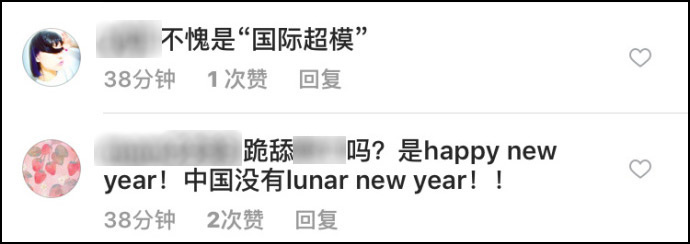
略有文化的中国人都知道,“Happy New Year” 通常是指“元旦快乐”;而且,中国照样有 lunar new year!中国人使用 lunar calendar 已经用了3000多年!难怪人们常说,“没文化真可怕!”但在狭隘民族主义思想的煽动之下,就是会出现如此多的"没头脑与不高兴”!
国外有中文媒体在抨击这种奇谈怪论时责问道:大过年“辱华”,“吃饱了撑的”?
What's the meaning of “吃饱了撑的”?
https://en.wiktionary.org/wiki/吃饱了撑的
having nothing better to do and just monkeying around;
In my opinion, the best translation for the phrase “吃饱了撑的” is "much ado about nothing"!
https://dictionary.cambridge.org/dictionary/english/ado
Meaning of ado in English
ado
noun [ U ]
a lot of activity, worry, or excitement that is unnecessary or greater than the situation deserves:
Synonym
fuss
much ado about nothing
much more activity, worry, or excitement than the situation deserves:
https://dictionary.cambridge.org/dictionary/english/fuss
fuss about nothing: It's all a fuss about nothing.
| | |
|
|
|
| Post removed: This post was hidden by a moderator or staff member because it was not in line with site rule | pkchan
United States
Local time: 19:22
Member (2006)
English to Chinese
+ ...
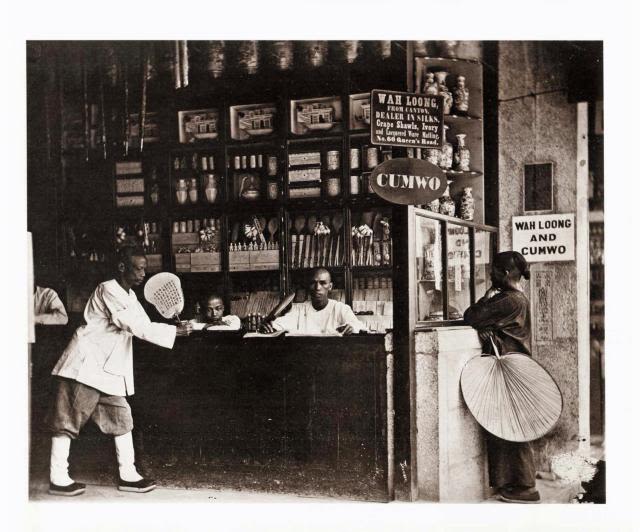
Wah Loong Seafood
Wah Loong Seafood
https://wahloongltd.com
Wah Loong ltd sells different kind of sauces, spices, oil, vinegar, and cooking wine and is one of the Western Canada dealers of Lee Kum Kee.
wah loong from wahloongltd.com
Shop of Wah Loong and Cumwo - Hong Kong
Gwulo: Old Hong Kong
https://gwulo.com › media
Sep 3, 2024 — They all deal in ivory ware, crepe shawls, paintings, lacquered ware, etc. One of the pictures shows the Wah Loong and Cumwo firm from Canton, ...
wah loong from gwulo.com
Sichuan Red Peppercorns (Szechuan Far Chiew) (華隆 ...
Wai Yee Hong Chinese Supermarket
https://www.waiyeehong.com › whole-spices › sichuan-...
Wah Loong Szechuan Pepper AKA Sichuan Pink Peppercorns, Far Chiew, Flower Pepper. Used commonly in Sichuan cuisine to impart a fragrant slightly numbing ...
wah loong from www.waiyeehong.com
7-day returns
Special
Wah Loong Seafood
https://wahloongltd.com › special
Special price for walkin customer ; CANADA SEACUCUMBER MEAT 2LB. Price: $74.00/bag ; CANADA ARCTIC SURF CLAM. Size: S 400g $out/box. M 1kg $out/bag. L/LL 1kg $out ...
| | | | ysun
United States
Local time: 18:22
English to Chinese
+ ...
| ysun
United States
Local time: 18:22
English to Chinese
+ ...
|
|
|
ysun
United States
Local time: 18:22
English to Chinese
+ ...
| Dragon Boat Race | May 30, 2025 |

2025 China Nanchang International Dragon Boat Race
2025-05-26
https://api.tt.jxnews.com.cn/news/2721359?app=jxtt
经过两日的激烈角逐,2025中国南昌国际龙舟赛于5月24日在九龙湖水域落幕。红谷滩区龙舟队、东莞中天集团龙舟队、宜春学院龙舟队分别斩获县区组(33人)、公开组(22人、高校组(12人)800M直道竞速赛冠军。
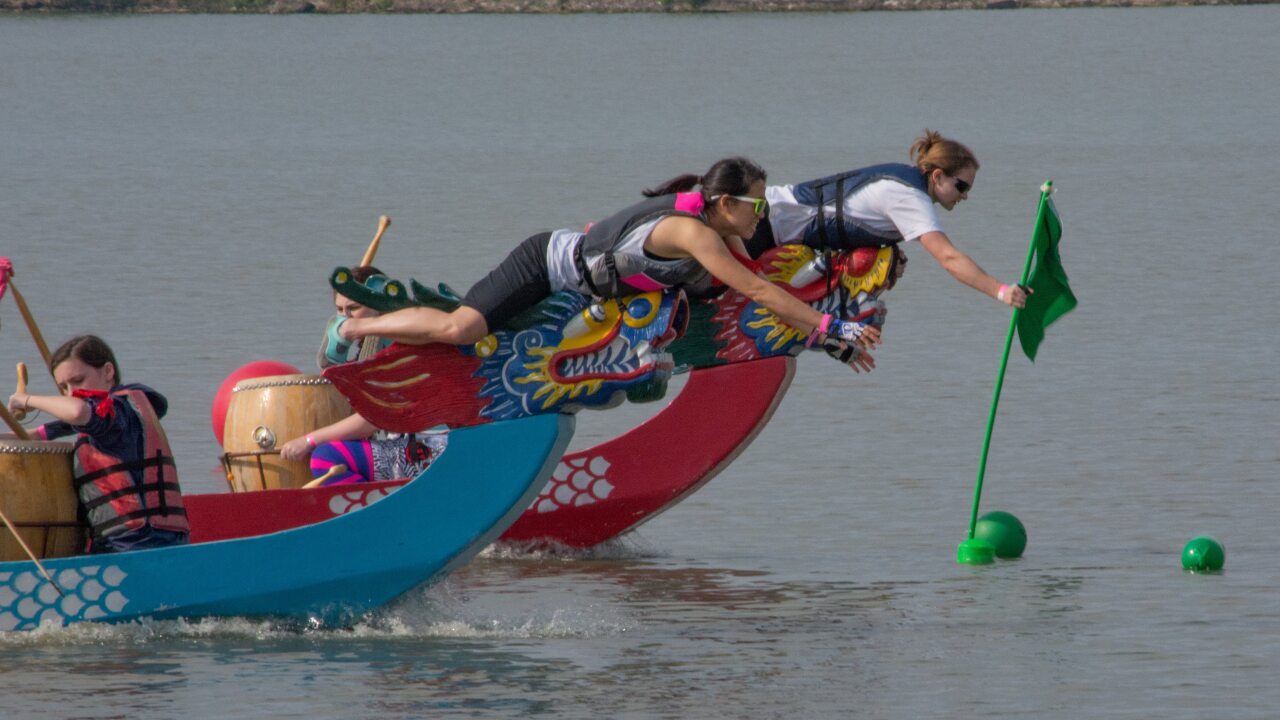
After two days of intense competition, the 2025 China Nanchang International Dragon Boat Race came to the end on May 24 at the Jiulong Lake. The Honggutan District Dragon Boat Team, the Dongguan Zhongtian Group Dragon Boat Team, and the Yichun University Dragon Boat Team respectively clinched the championships in the 800m straight course sprint of the county and district group (33-person dragon boat), the open group (22-person dragon boat), and the university group (12-person dragon boat).
2025 China Nanchang InternationalDragon Boat Race
2025 中国·南昌国际龙舟赛
https://www.youtube.com/watch?v=9gtMB120TKI
| | | | ysun
United States
Local time: 18:22
English to Chinese
+ ...
| What Dragon Boat Festival really means | May 31, 2025 |
CGTN: Not just a race: What Dragon Boat Festival really means
Culture China
28-May-2025
https://news.cgtn.com/news/2025-05-28/Not-just-a-race-What-Dragon-Boat-Festival-really-means-1DGylApAhTW/p.html
The Dragon Boat Festival is often recognized for its thrilling boat races and sticky rice dumplings (zongzi), but its roots run much deeper. Beyond the splash of paddles and the cheers of spectators lies a festival rich in meaning – one that intertwines ancient legends with timeless practices for wellness and protection.
At its heart is the story of Qu Yuan, the exiled poet whose loyalty and despair gave rise to the dragon boat tradition. Yet the festival also reflects something more practical and universal: the way ancient Chinese communities responded to the challenges of the summer season. The fifth lunar month was once considered the most dangerous time of year – a period when disease, insects, and bad luck seemed to multiply. To protect themselves and their families, people turned to the natural world: hanging mugwort and calamus at their doors, wearing scented sachets, and preparing food not only for taste, but for health.
Today, many of these traditions continue – in different forms, and in different places. From herbal customs to symbolic rituals, the Dragon Boat Festival is a reminder of how collective cultural memory and seasonal wisdom can offer comfort, healing, and a connection to those who came before us.
This is Dragon Boat Festival – not just a race, but a ritual. Not just a memory, but a moment to reconnect with nature, heritage, and ourselves.
CGTN (TV channel)
https://en.wikipedia.org/wiki/CGTN_(TV_channel)
CGTN is the English-language news channel of state-run China Global Television Network, based in Beijing, China. It is one of several channels provided by China Global Television Network, the international division of Chinese state broadcaster China Central Television (CCTV), under the control of the Central Propaganda Department of the Chinese Communist Party.
Bamboo Leaves Savory Sticky Rice/Glutinous Rice Dumplings - MB Creative Kitchen
https://mbcreativekitchen.com/recipes/030_bamboo_leaves_savory_sticky_rice_glutinous_rice_dumplings.php
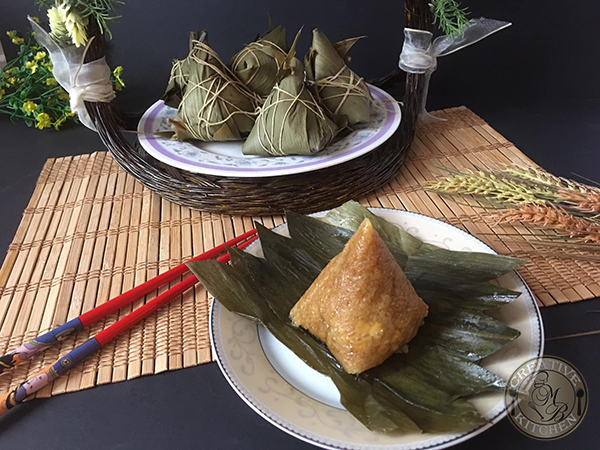
"Zongzi" is transliteration, not translation, of sticky rice dumplings or glutinous rice dumplings.
Glutinous rice
https://en.wikipedia.org/wiki/Glutinous_rice
Glutinous rice (Oryza sativa var. glutinosa; also called sticky rice, sweet rice or waxy rice) is a type of rice grown mainly in Southeast Asia and the northeastern regions of South Asia, which has opaque grains and very low amylose content and is especially sticky when cooked. It is widely consumed across Asia.
It is called glutinous (Latin: glūtinōsus)[1] in the sense of being glue-like or sticky, and not in the sense of containing gluten (which it does not). While often called sticky rice, it differs from non-glutinous strains of japonica rice, which also become sticky to some degree when cooked. There are numerous cultivars of glutinous rice, which include japonica, indica and tropical japonica strains.
| | | | hj58
Local time: 02:22
English
施爱东先生的大作里有一处错误,把外国漫画里的东和西理解错了(黄佶)
https://loong.cn/shi_ai_dong_books_mistakes.html
作者显然错误理解了漫画中地上写的 east 和 west,把前者理解成了欧美人现在常说的“东方”(亚洲地区),把后者理解成了我们中国人现在常说的“西方”(�... See more 施爱东先生的大作里有一处错误,把外国漫画里的东和西理解错了(黄佶)
https://loong.cn/shi_ai_dong_books_mistakes.html
作者显然错误理解了漫画中地上写的 east 和 west,把前者理解成了欧美人现在常说的“东方”(亚洲地区),把后者理解成了我们中国人现在常说的“西方”(欧美地区)。
作者以为漫画说的是东西方两个地区之间的相互移民,以为漫画中只有东方和西方两个主体,以为漫画作者在褒扬从西方(欧美)来东方(亚洲或中国)的移民,贬斥从东方(亚洲或中国)去西方(欧美)的移民。
实际上漫画中有三个主体:美国,欧洲和亚洲(中国)。
漫画中地上写的 east 指的是美国的东海岸,移民主要来自美国东面的欧洲;而 west 指的是美国的西海岸地区,这里的移民主要是来自美国西面的亚洲或中国。下面这张世界地图是以美国为中心的,可以清楚地看到:欧洲在美国东面,而亚洲在美国西面(左西右东)。
[Edited at 2025-07-07 13:38 GMT] ▲ Collapse
| | | | hj58
Local time: 02:22
English
|
|
|
| Post removed: This post was hidden by a moderator or staff member because it was not in line with site rule | | Post removed: This post was hidden by a moderator or staff member because it was not in line with site rule | | Post removed: This post was hidden by a moderator or staff member because it was not in line with site rule | | Pages in topic: < [1 2 3 4 5 6 7 8 9 10 11 12 13 14 15 16 17 18 19 20 21 22 23 24 25 26 27 28 29 30 31 32 33 34 35 36 37 38 39 40 41 42 43 44 45 46 47 48 49 50 51 52 53 54 55 56 57 58 59 60 61 62 63 64 65 66 67 68 69 70 71 72 73 74 75 76 77 78 79 80 81 82 83 84 85 86 87 88 89 90 91 92 93 94 95 96 97 98 99 100 101 102 103 104 105 106 107 108 109 110 111 112 113 114 115 116 117 118 119 120 121 122 123 124 125 126 127 128 129 130 131 132 133 134 135 136 137 138 139 140 141 142 143 144 145 146 147 148 149 150 151 152 153 154 155 156 157 158 159 160 161 162 163 164 165 166 167 168 169 170 171 172 173 174 175 176 177 178 179 180 181 182 183 184 185 186 187 188 189 190 191 192 193 194 195 196 197 198 199 200 201 202 203 204 205 206 207 208 209 210 211 212 213 214 215 216 217 218 219 220 221 222 223 224 225] > | To report site rules violations or get help, contact a site moderator: You can also contact site staff by submitting a support request » “龙”的英文应该翻译成 Loong - 转发 (A Chinese Teacher Suggests that "Dragon" should be written as "Loong") | TM-Town | Manage your TMs and Terms ... and boost your translation business
Are you ready for something fresh in the industry? TM-Town is a unique new site for you -- the freelance translator -- to store, manage and share translation memories (TMs) and glossaries...and potentially meet new clients on the basis of your prior work.
More info » |
| | Protemos translation business management system | Create your account in minutes, and start working! 3-month trial for agencies, and free for freelancers!
The system lets you keep client/vendor database, with contacts and rates, manage projects and assign jobs to vendors, issue invoices, track payments, store and manage project files, generate business reports on turnover profit per client/manager etc.
More info » |
|
| | | | X Sign in to your ProZ.com account... | | | | | |



 Login to reply/comment
