
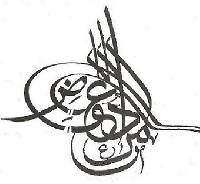
Glossary entry (derived from question below)
Jun 7, 2005 00:01
21 yrs ago
4 viewers *
Arabic term


Hadretek
hi,
A friend of mine uses this word as a way of showing respect but we are having trouble to find an English equivalent, how would you translate it?
Thanks a lot for your help,
Vampyre
PS Please answer in English as I dont speak any Arabic. Thanks :)
A friend of mine uses this word as a way of showing respect but we are having trouble to find an English equivalent, how would you translate it?
Thanks a lot for your help,
Vampyre
PS Please answer in English as I dont speak any Arabic. Thanks :)
Proposed translations
(English)
| 5 +8 | You |
Fuad Yahya
|
| 5 +5 | Sir |
Sam Berner (X)

|
| 5 | Your good self |
Amira Rashwan

|
| 3 | mister |
Andrew Vdovin

|
Change log
Jun 7, 2005 02:52: Fuad Yahya changed "Field" from "Other" to "Art/Literary"
Proposed translations
+8
1 hr
Selected
You
You need not find an equivalent, because English has done away with such distinction, and so has Arabic (for the most part).
In many languages, the second person singular pronoun takes on (at least) two forms, familiar and formal. In French, this dulaity is expressed in "tu" and "vous;" in German, "du" and "Sie;" and so on. In many instances, the formal takes on the plural form. In Arabic, the plural is sometimes used in that way.
English has done away with this duality, which sometimes causes a problem with translation, especially when the choice of form has some significance. For Example, the title of Martin Buber's famous book "Ich und Du" is commonly translated as "I and Thou." Many people think the choice of "Thou" is incorrect here, because Buber used the familiar form of the second person pronoun, "du," for an essential reason that is related to the philosophy he espoused in the book, which acknowledges the reality of the "other" as a being with whom we enter into an intimate dialogue as a person. Others see "Thou" as an attempt to show the reverence that Buber showed towards the "other," but that is contrary to the German practice of using "du" in prayer to God.
The point is that there are situations where the familiar vs. the formal becomes an issue in translation.
But the use HADHRITAK and HADHRITIK does not give rise to an issue. It is simply the custom to address people that way in the Egyptian dialect as a way of showing respect. The origin is Ottoman Turkish, where the Sultan was supposed to have an official persona that can be addressed directly, but he himself could not be addressed directly by others, even when spoken to face to face. The official persona was "present" everywhere in the realm, representing the authority of the state, hence the word HAZRAT.
The idea of having a "presence" attached to high personages, and which transcends the physical or earthly dimensions of the person, seeped into the languages of several Islamic nations. The names of the prophet Muhammad, his immediate family, and his revered companions are still preceded by HAZRAT in several Islamic communities until today. You often read "HAZRAT FATIMA" or "HAZRAT UTHMAN." One, in other words, does not speak of such individuals directly, but of their transcendent "presence."
In Saudi Arabia, where I grew up, members of the royal family are often adressed with their title preceded by HADHRAT, as in HADHRAT SAHIB AL-SUMUWW AL-MALAKIYY ("Your Royal Highness") in official correspondence.
In addressing ordinary people, this manner of speech has all but faded away in most areas, but it is still very strong in Egypt. It does not have the same royal/divine connotations that used to be associated with the term. It is now merely a respectful, genteel way to address people. English simply does not have a second personal pronoun dedicated to that purpose. It would give a skewed impression if an older style, like "thou" were used, because the speaker does not mean to be speaking in such a manner, but merely to be respectful.
--------------------------------------------------
Note added at 10 hrs 20 mins (2005-06-07 10:21:30 GMT)
--------------------------------------------------
Comment on the asker\'s added note:
On nouns and pronouns:
A pronoun is an element that operates like a noun. That is why it is called a pronoun. There are many different kinds of pronouns:
Personal pronouns (subject: I, we, you, etc.; object: me, us, you, etc.; reflexive: myself, ourselves, yourself, etc.)
Possessive pronouns (mine, ours, yours, etc.)
Relative pronouns (that, which, who, etc.)
Demonstrative pronouns (this, that, these, etc.)
Interrogative pronouns (what, who, whom, etc.)
Indefinite pronouns (everybody, anybody, nobody, etc.)
In short, any element that takes the place of a noun is called a pronoun. In referring to the first person and the second person, the standard form is to use pronouns, not nouns, as in \"I love you.\" When I address my wife, it would be non-standard to say, \"Fuad loves Denisa.\"
Is HADHRITAK a noun or a pronoun? I don\'t believe it matters what we call it, because it will still function the same way. \"HADHRITAK\" (for males) and \"HADHRITIK\" for females are equivalent to \"your elevated self,\" \"your esteemed person,\" \"your [fill in the blank],\" etc. These are, strictly speaking, noun phrases. But notice how they refer to the second person, which is typically addressed using a pronoun, not a noun.
When translating, one needs to both be faithful to the intended meaning and tone of the source statement and at the same time accomodate the target language requirements. In the case of HADHRITAK and HADHRITIK, this double desideratum, as we have seen, is accomplished by using a suitable second person pronoun, based on the context. For example:
إزاي حضرتك
How are you?
عربية حضرتك جديدة
Your car is new.
It is true that the source statement is cast in the form of a noun phrase, but that is not a compelling reason at all to use a noun phrase in the translation. Only a computer would translate in this mechanical fashion.
Peer comment(s):
| agree |
Stephen Franke
: Agree completely with Fuad and his excellent treatment of those expressions of respectful deference = "your eminent presence"
45 mins
|
| agree |
Iman Khaireddine
: Whew! Great explanation Fuad! After reading this... I think I'm going back to sleep :-)
2 hrs
|
| agree |
ahmadwadan.com
4 hrs
|
| agree |
Aisha Maniar
7 hrs
|
| agree |
Alexander Yeltsov
8 hrs
|
| agree |
Sam Berner (X)
: You should write a book on language, Fuad
8 hrs
|
| agree |
neuneutek
: There is a similar form in Turkish but it's not Hazretiniz.... :) It's kendi + Possessive pronouns in Turkish. I definitely agree with Fuad. hadretek/hadretak replaces pronouns. Like you say: beyt hadretak... ana dhahabtu l'hadhretek etc...
12 hrs
|
| agree |
AhmedAMS
8 days
|
4 KudoZ points awarded for this answer.
Comment: "Thanks a lot for your efforts, your explanation is very helpful."
+5
8 mins
Sir
The way kids used to address their fathers before politness in the West went down the gurgle :-) "Yes, Sir, yes, ma'am"
Peer comment(s):
| agree |
Dina Abdo
: Good morning :)
0 min
|
| agree |
Hassan Al-Haifi (wordforword)
55 mins
|
| agree |
soamo19
: it depends on the person whom we address (Hadritak for Sir and Hadritik Madam)
3 hrs
|
| agree |
Mohamed Gaafar
8 hrs
|
| agree |
Maureen Millington-Brodie
: "Your presence/honour" sound archaic in English, you just need something denoting respect
13 hrs
|
1 hr
Andrew Vdovin
Works in field
DELVING into DETAIL
Native in: Russian 
Works in: English to Russian, Russian, Russian to English, and 2 more.
mister
Or Sir.
--------------------------------------------------
Note added at 12 hrs 14 mins (2005-06-07 12:15:10 GMT)
--------------------------------------------------
Well, I\'m afraid that the only possible form of address which could be implied both to men and women is \'Dear Friend!\' It is used pretty often, too.
--------------------------------------------------
Note added at 12 hrs 14 mins (2005-06-07 12:15:10 GMT)
--------------------------------------------------
Well, I\'m afraid that the only possible form of address which could be implied both to men and women is \'Dear Friend!\' It is used pretty often, too.
604 days
Amira Rashwan
Native in Arabic
Works in field
www.rolstrans.com
Native in: Arabic
Works in: Arabic to English, English to Arabic, Russian to English, and 3 more.
Your good self
"hadretak" , when i used to write a formal letters at the company where I used to work , I used " your good self" as " 7dretak"
of course Iam agree with Mr. Yehia.
but according to me , I guess " your good self" is so proper in case of respectness as you have mentioned.
of course Iam agree with Mr. Yehia.
but according to me , I guess " your good self" is so proper in case of respectness as you have mentioned.
Discussion